





Free shipping from €80 (Mainland France)* - €150 (Europe)* - Free returns* - Pay in 3 or 4 installments
Birch is the rising wood species in professional baseball — a hybrid species that combines the hardness of maple with the flexibility of ash, producing a unique result: a wood that hardens with every hit, resists breakage better than maple, and does not flake like ash. Recommended by coaches for the aluminum-to-wood transition and favoured by power hitters who want durability and feel, birch is the most versatile wood in baseball today. Discover our B45 Yellow Birch, Victus and Marucci birch bat selection. → See all our wood bats — Compare with maple — Compare with ash
3 products
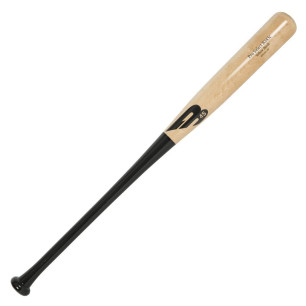
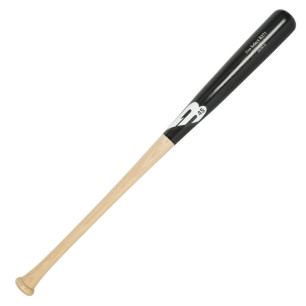
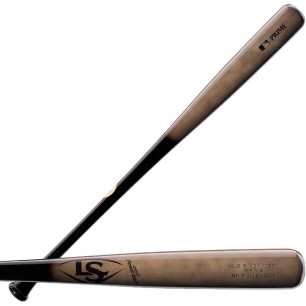
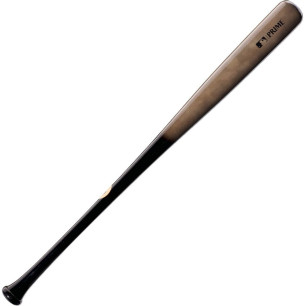
Birch wood baseball bat: the complete technical guide
Yellow birch is one of the most significant discoveries in modern baseball. Long overlooked in favour of maple and ash, it was popularised by Canadian brand B45 in the early 2010s and has been approved for MLB play for over a decade. Today, a growing number of professional and amateur players choose birch for one simple reason: it offers what neither maple nor ash can deliver alone — a unique combination of hardness, flexibility and durability.
This page is dedicated exclusively to birch wood baseball bats. For a full comparison with maple and ash, visit our wood bat guide.
The unique properties of yellow birch
Quebec yellow birch is the species used by B45 and other serious birch bat manufacturers. This is no coincidence — North American yellow birch possesses a combination of properties that few other species can match:
Hardness comparable to maple. Contrary to a common misconception, yellow birch is a hardwood — as hard as maple in its cellular structure. This means the ball does not sink into the barrel on contact; it rebounds with force. Yellow birch's hardness allows the ball to travel greater distances because it does not absorb impact energy the way softer species do.
Fibre flexibility like ash. Where maple is rigid, birch is flexible. This flexibility creates a slight whip effect at the moment of impact, reducing vibration on off-centre hits and offering a degree of forgiveness that pure maple does not allow.
Progressive hardening. Like maple, birch compresses and hardens with repeated use. This natural hardening process is faster than composite break-in but delivers unique sensations — the bat progressively improves in performance between 100 and 200 hits.
Superior breakage resistance vs maple. This is the most frequently cited advantage by birch bat users. Yellow birch's growth rings do not represent a structural weakness the way ash grains do — meaning your bat lasts longer, often through an entire season. In intensive use, birch bats break significantly less frequently than maple.
No flaking. Like maple and unlike ash, birch does not flake. When it does break, it snaps cleanly.
Birch vs maple vs ash: the complete comparison
| Criterion | Birch | Maple | Ash |
|---|---|---|---|
| Hardness | ★★★★☆ | ★★★★★ | ★★★☆☆ |
| Flexibility | ★★★★☆ | ★★☆☆☆ | ★★★★★ |
| Breakage resistance | ★★★★★ | ★★★☆☆ | ★★★☆☆ |
| Break-in required | Yes (100–200 hits) | No | No |
| Flaking | No | No | Yes |
| Sweet spot size | Large | Concentrated | Very large |
| Weight at equal length | Medium | Heavy | Light |
| Best for | All profiles | Power | Contact |
Why birch is ideal for the aluminum-to-wood transition
This is the most commonly recommended use of birch by experienced coaches. Here is why:
Forgiveness on mishits. A player transitioning from aluminum to wood has not yet developed the automatic mechanics to consistently centre every hit in the sweet spot. Maple punishes off-centre contact immediately — birch forgives slightly better thanks to its flexibility. It is not a tool that hides poor mechanics (the way ash might be), but a development tool that allows players to build confidence while working on technique.
Progressive hardening as a teaching tool. Feeling the bat evolve and improve through use is a genuinely enriching experience for a developing player. A broken-in birch bat provides valuable sensory feedback about contact quality that accelerates technical development.
Durability in training. Intensive wood bat training sessions break a lot of maple bats. Birch holds up better under heavy use — a real economic advantage for clubs and players who train multiple times per week.
The best birch baseball bats
B45 Yellow Birch — the world benchmark in birch
B45 Yellow Birch bats are handcrafted by former professional baseball players with the goal of making them last through the rigours of professional and amateur play alike. B45 is the brand that put yellow birch on the MLB map and remains the absolute reference in this species. Their B271 model (wide barrel, thin handle — birch equivalent of the C271 maple), B243 (versatile all-around profile) and B110 (contact hitter) cover every hitter profile. B45 combines forest science and baseball expertise at every step: billet selection with ideal grain alignment and density, slow kiln-drying and stabilisation, steel-pressing processes that precondition the barrel from day one.
Victus Grit Birch
Victus applies the same VGS surface treatment to its birch bats as to its maple models — hardening the barrel surface from the very first use and significantly reducing the usual break-in period. Victus birch profiles are available in full customisation with short lead times. An excellent choice for players who want the advantages of birch with near-immediate performance.
Marucci Birch
Marucci offers its signature profiles (AP5, AP5 Pro Cut, CU26) in birch, with the same billet selection standards as their maple models. The AP5 profile in birch is particularly favoured by mixed-profile hitters who want birch's forgiveness combined with Marucci's characteristically wide barrel.
Breaking in a birch bat: how and how long?
Unlike maple and ash bats which are ready to use straight from the packaging, a birch bat benefits from a gradual break-in period to reach its peak performance.
Phase 1 — First 50 hits: use light training balls or soft toss. Avoid full-power swings. The barrel begins to compress gradually.
Phase 2 — 50 to 150 hits: progressively increase intensity. The birch fibres tighten, the barrel becomes harder and more reactive. The feel at contact improves noticeably.
Phase 3 — Beyond 150 hits: the bat is fully broken in. You can use it at full power in games and training sessions.
During break-in: avoid hitting in cold temperatures (below 10°C / 50°F), do not hit softballs, and inspect the barrel after each session for any signs of cracking.
Caring for your birch bat
Hitting technique: birch has no preferential hitting orientation — its flexible fibres give it good resistance in all directions. Unlike ash, there is no specific need to hit "label up."
Storage: store your birch bat in a dry location at ambient temperature. Birch is sensitive to humidity variations — avoid damp cellars or car trunks in winter.
Inspection: after each intensive session, run your hand along the barrel and handle to check for micro-cracks. A bat that produces a hollow sound when lightly tapped should be inspected before further use.
Why buy your birch bat from Sportland American?
Since 2011, Sportland American has been Europe's specialist destination for American sports equipment. We import professional-quality birch bats directly from the United States and Canada — B45 Yellow Birch, Victus, Marucci. Our team advises players on the right model for their hitting profile, level and intended use (games or training). Fast delivery across France (24–48h) and worldwide shipping to over 50 countries.
→ Other wood species: Maple bats — Ash bats → All wood bats → Composite bats — Fungo bats → Complete baseball bat guide → Complete your kit: baseball gloves — baseball cleats