




Free shipping from €80 (Mainland France)* - €150 (Europe)* - Free returns* - Pay in 3 or 4 installments
The wood baseball bat is the purest form of the game — the equipment used by every MLB player, every national league competitor, and every serious amateur who wants to sharpen their technique at the plate. Maple, ash or birch: each species has distinct physical properties that suit a different type of hitter. At Sportland American, we stock the finest wood bats on the market — Louisville Slugger, Marucci, Rawlings, Victus — imported directly from the United States. → See all our baseball bats — Aluminum bats by age category

16 products
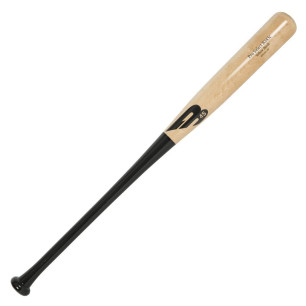
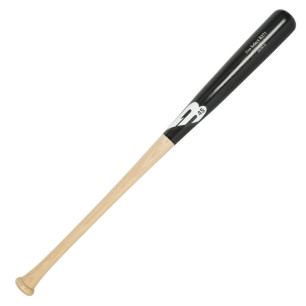
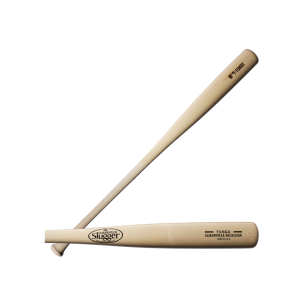
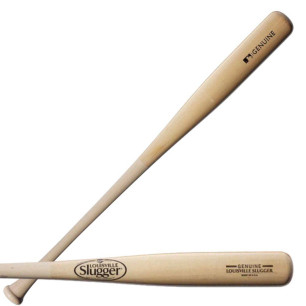
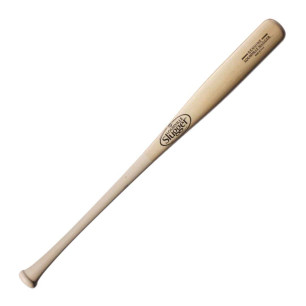
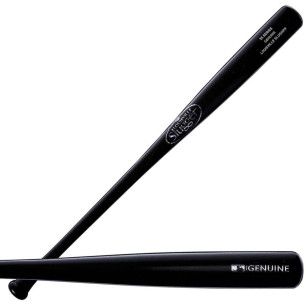
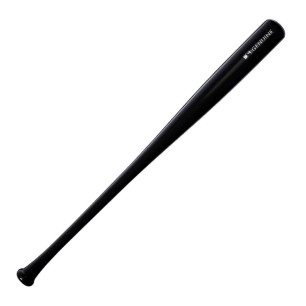
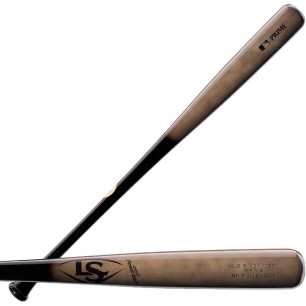
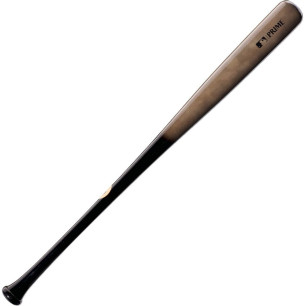
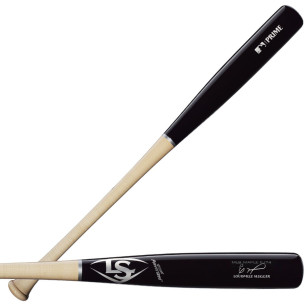
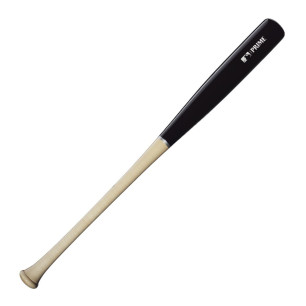
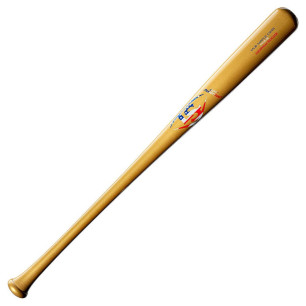
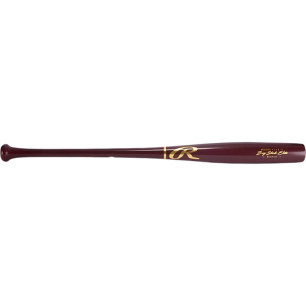
Wood baseball bat: the complete guide to choosing your species and profile
The wood bat is to baseball what gut strings are to tennis: the original material, the most demanding, and the one that truly exposes a player's level. Unlike aluminum or composite bats that forgive off-centre contact, a wood bat is unforgiving — only a ball struck squarely in the sweet spot produces a satisfying result. This is precisely why high-level coaches consistently recommend training regularly with a wood bat: it forces you to hit the ball correctly, every single swing.
Wood bats are mandatory in every professional league — the MLB, independent leagues, and senior adult national championships in France and across Europe. They are also the preferred choice of serious amateur players who want to develop technically and train under conditions as close as possible to professional play.
This page is exclusively dedicated to wood baseball bats. For aluminum and composite bats by age category, visit our aluminum baseball bats page.
The 3 major wood species for baseball bats
This is the first and most important decision to make. Maple, ash or birch — each species has distinct physical properties that directly influence the swing, the feel at contact, and the durability of the bat.
Maple — the professional standard
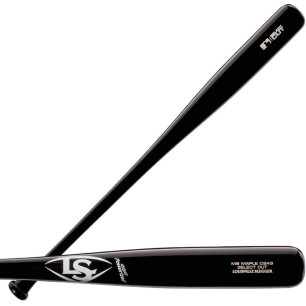
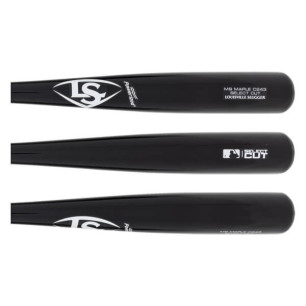
Maple is today the most widely used species in the MLB, with approximately 75 to 80 percent of professional hitters using a maple bat. It is a diffuse-porous wood — extremely hard and dense — that produces a very hard hitting surface and outstanding long-term durability. Unlike ash, the barrel of a maple bat actually compresses with repeated use, becoming harder and more reactive with every ball struck.
Maple does not flake like ash, making it safer when it breaks — splinters stay bonded to the wood rather than flying loose. The trade-off is that maple can break without warning: where ash shows signs of wear before giving way, a maple bat can look perfectly sound and snap suddenly. Its high density makes it slightly heavier than ash at equivalent length and model.
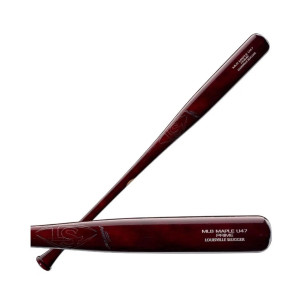
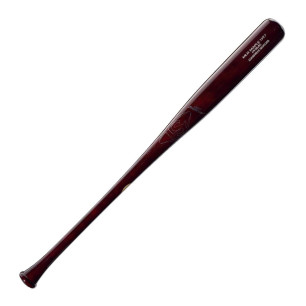
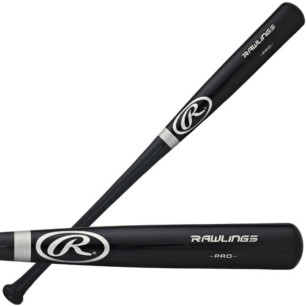
Best for: power hitters, experienced players, high-level competitive play. Top models: Louisville Slugger MLB Prime C271 maple, Marucci AP5 maple, Rawlings Pro maple, Victus Grit maple.
Ash — tradition and flexibility
Ash was the undisputed king of professional baseball bats for over a century. It is a ring-porous wood — lighter and more flexible than maple — that creates a slight whip effect at the moment of contact, which can help generate additional bat speed for contact hitters. Ash grains are clearly visible on the barrel, making quality control during manufacturing straightforward.
The main drawback of ash is its tendency to flake over time. The grains gradually break down under repeated impact, particularly if the hitter does not hit "label up" — striking with the label facing up, which places the grains perpendicular to the ball and maximises the bat's structural integrity. Due to the emerald ash borer infestation that has significantly reduced quality ash stocks in North America, some professional-grade ash models have become rarer and more expensive in recent years.
Best for: contact hitters, players transitioning from aluminum to wood, players who prefer a lighter, faster swing. Top models: Louisville Slugger MLB Prime ash, Rawlings Pro ash, Sam Bat ash.
Birch — the best of both worlds
Birch has steadily grown in popularity over the past decade, largely driven by Canadian brand B45, which popularised yellow birch from Quebec at MLB level. It is a hybrid species that sits between maple and ash: it has some of maple's hardness combined with some of ash's flexibility. Slightly more flexible than maple but harder than ash, birch also has the distinctive property of hardening progressively with use — the barrel becomes denser and more reactive with hits, typically reaching its performance peak after 100 to 150 swings.
Birch is frequently recommended to players transitioning from aluminum to wood because it tolerates off-centre contact slightly better than maple while offering superior durability compared to ash.
Best for: players transitioning from aluminum to wood, versatile hitters between contact and power profiles. Top models: B45 Yellow Birch, Victus Grit birch, Marucci birch.
How to read the grain of a wood bat
The quality of a wood bat is not just about the brand or the price — it can be read directly in the grain of the wood. This is an essential skill that serious players need to develop.
For ash bats: the grains are clearly visible on the barrel. Look for grains that are as straight and parallel as possible to the bat's axis. The straighter the grain, the stronger and more durable the bat. Grains that deviate from the central axis indicate a weaker bat that is more susceptible to breaking.
For maple and birch bats: the grains are less visible because these species have diffuse pores. Inspect the end of the handle — the fibres should be tight and regular. Avoid bats with visible knots in the barrel hitting zone.
At Sportland American, every wood bat in our range is selected from professional-grade billets with straight, tight grain — we do not sell second-quality bats.
The best wood baseball bats for 2025/2026
Louisville Slugger MLB Prime — the MLB institution
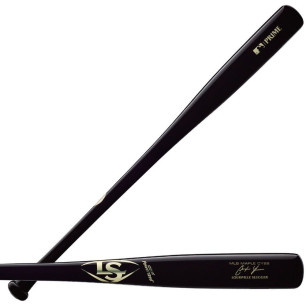
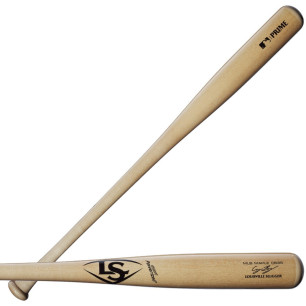
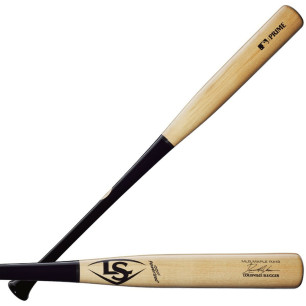
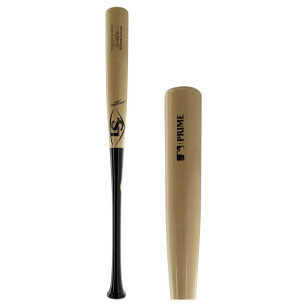
Louisville Slugger has been making baseball bats since 1884. The MLB Prime series is the brand's flagship line, used by dozens of MLB players every season. Available in maple, ash, and birch across a wide range of barrel profiles (C271, C243, I13, R161 and more), it offers a perfect balance of tradition and performance. The C271 maple is the most popular model — a thin handle, wide barrel profile used by hitters including Bryce Harper and Aaron Judge. The MLB Prime is the benchmark for players who want exactly the same tool as the professionals.
Marucci AP5 — the modern pro's choice
Founded in 2009 by former MLB players, Marucci is now used by more than 25 percent of MLB hitters. The AP5 (Andrew McCutchen signature model) is the brand's best-selling bat: a wide barrel, thin handle, and a slightly end-loaded balance that suits both power hitters and contact hitters alike. Available in maple and birch, the AP5 is one of the most consistently praised wood bats on the amateur and professional market.
Rawlings Pro — handcrafted precision
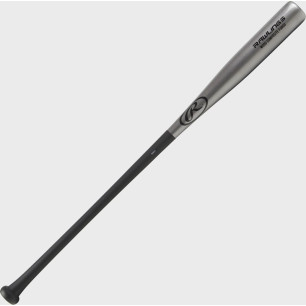
Rawlings is one of the few brands still producing its wood bats in a dedicated handcraft facility in the United States. Its Pro bats are made from carefully selected maple billets, hand-turned on a lathe, and finished with hand-stitched leather grips on premium models. The Rawlings Pro line is particularly valued for the consistency of its barrel profiles and the quality of its finish across every individual bat.
Victus Grit — innovation and durability
Victus is the youngest brand in our wood bat range but one of the most innovative. Its Grit series, available in maple and birch, features a unique surface treatment that enhances barrel hardness from the very first use — without waiting for the natural break-in process. Victus also offers an advanced custom bat programme that allows you to order a bat built precisely to your individual measurements and preferences.
B45 Yellow Birch — the birch benchmark
B45 specialises in yellow birch from Quebec — a species recognised for its exceptional hardness and flexibility. B45 bats are handcrafted by former professional players and have been approved for MLB play for over a decade. Their breakage rate is significantly lower than the market average, making them an outstanding long-term investment for players who want a wood bat that genuinely lasts.
Barrel profiles: C271, C243, AP5, I13 — what are the differences?
The barrel profile determines the overall shape of the bat — the size of the barrel, the thickness of the handle, and the transition curve between the two. It is a criterion just as important as the wood species.
Large barrel / thin handle (C271, AP5) — the most common profile in MLB. A large barrel provides a bigger hitting surface and more potential power. A thin handle increases swing speed. Suited to power hitters and experienced players. Slightly higher risk of handle breakage.
Medium barrel / medium handle (C243, I13) — an intermediate, more versatile profile. Good balance between power and durability. Recommended for players transitioning from aluminum to wood and mixed contact/power profiles.
Slim barrel / thick handle — a less common profile, used by some contact hitters who want to reduce total bat weight. The thicker handle is more robust and less prone to breaking, at the cost of a smaller sweet spot.
Why the world's best coaches insist on training with wood
Training regularly with a wood bat is one of the most effective methods available for improving hitting technique. Here is why:
It exposes mechanical flaws immediately. A mishit with an aluminum bat can still produce an acceptable result thanks to the trampoline effect. With wood, an off-centre contact is punished instantly — the ball does not carry, and the vibration in the hands leaves no doubt. The hitter learns to strike the ball correctly.
It builds swing strength. A wood bat is generally heavier than an aluminum bat of the same length. Training with wood strengthens the muscles involved in the swing and improves bat speed once the player returns to aluminum or composite in competition.
It prepares for the highest level. In France, across Europe, and in the United States, senior adult competitive play at the highest levels requires wood. Developing comfort with wood early is a non-negotiable technical investment for any player who aims to compete at national level.
Caring for your wood bat
For ash bats: always hit "label up" — the label should face up at the point of contact. This places the bat's grains perpendicular to the ball and significantly reduces flaking. Wipe the barrel regularly with a lightly oiled cloth to prevent moisture absorption.
For maple bats: no specific hitting technique required. Inspect the handle regularly — maple can break without warning. Store at ambient temperature away from excessive humidity.
For all wood bats: never hit in cold temperatures (below 10°C / 50°F) — wood becomes brittle in the cold and the risk of breakage increases considerably. Never use a baseball wood bat to hit softballs. Store the bat horizontally or vertically, away from hard impacts.
Why buy your wood bat from Sportland American?
Since 2011, Sportland American has been Europe's specialist destination for American sports equipment. We import professional-quality wood bats directly from the United States — Louisville Slugger, Marucci, Rawlings, Victus, B45 — including models that are difficult or impossible to find elsewhere in France and Europe. Every wood bat in our range is selected from superior-grade billets with straight, tight grain. Our team advises players on the right species, barrel profile, and length for their hitting style and level. Fast delivery across France (24–48h) and worldwide shipping to over 50 countries.
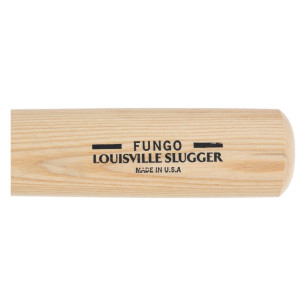
→ Wood bat sub-categories: Maple — Ash — Birch — Fungo → Also available: Composite baseball bats → Complete baseball bat guide — all materials → Aluminum bats by age category → Complete your kit: baseball gloves — baseball cleats