





Free shipping from €80 (Mainland France)* - €150 (Europe)* - Free returns* - Pay in 3 or 4 installments
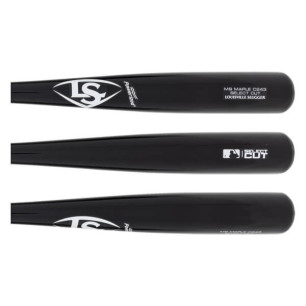
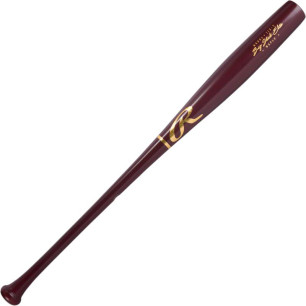
Maple is the most widely used wood species in the MLB and the absolute reference for competitive hitters: a diffuse-porous wood of exceptional hardness whose barrel compresses and hardens with every ball struck, delivering progressively better performance over time. Our maple wood bats — Louisville Slugger, Marucci, Rawlings, Victus — are individually selected from first-grade billets with straight, tight grain, imported directly from the United States. → See all our wood bats — Compare with ash — Compare with birch
8 products
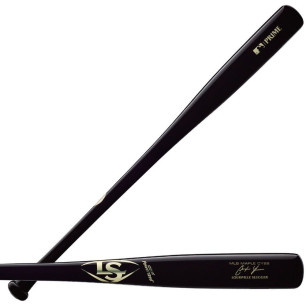
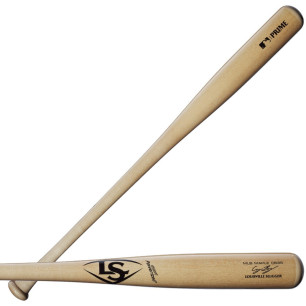
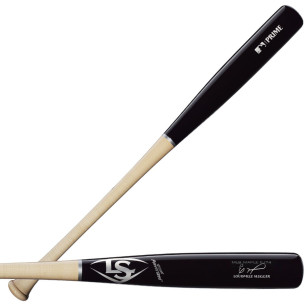
Maple wood baseball bat: the complete technical guide
Maple became the dominant wood species in the MLB from the early 2000s, when Barry Bonds popularised it during his record-breaking seasons. Since then, approximately 75 to 80 percent of professional hitters have used maple bats — a figure that continues to grow. This success is explained by a unique set of physical properties that make maple the most suitable wood for high-level baseball: maximum hardness, progressive barrel compression, and an unmatched hitting surface.
This page is dedicated exclusively to maple wood bats. For a comparison with ash and birch, visit our complete wood bat guide. For aluminum bats by age category, head to our aluminum baseball bats page.
Why maple dominates professional baseball
Maple is a diffuse-porous wood — unlike ash, whose pores are clearly visible to the naked eye, maple's pores are microscopic and evenly distributed throughout the wood. This internal structure gives maple its defining properties:
Superior hardness. Maple is significantly harder than ash or birch. This hardness translates to a stiffer hitting surface that is less deformable under impact — the ball rebounds off a maple barrel with greater efficiency on centred contact.
Progressive compression. Unlike ash, which flakes and degrades over time, maple actually compresses with repeated use. The barrel becomes physically denser and harder as you hit — a well-used maple bat performs better than a brand-new one. This is a unique advantage that neither ash nor birch offers.
No flaking. Maple does not flake under impact. When it breaks, it snaps cleanly — which is actually safer than ash, whose flaking can send splinters in multiple directions.
More concentrated sweet spot. The trade-off for maple's hardness is a slightly smaller effective sweet spot compared to ash. Off-centre hits are felt more strongly in the hands. This is why maple bats are recommended for experienced players who consistently make contact in the sweet spot — not for beginners who are still developing their swing consistency.
Cupping: what it is and why it matters
Cupping is a concave hollow carved into the end of the barrel (the cup end). It is present on the vast majority of professional maple bats and serves two key purposes:
Reducing total weight. The cup removes approximately 10 to 20 grams from the end of the barrel, reducing the bat's total weight without affecting its length or drop. For maple bats — naturally heavier than ash — this is an important adjustment that helps maintain swing speed.
Shifting the balance point. By removing weight from the barrel end, cupping moves the bat's balance point slightly toward the handle. This produces a more neutral swing feel and improved manoeuvrability for contact hitters who prioritise bat speed over raw power.
Standard cup vs deep cup vs flat top. A standard cup (12–15mm depth) is used on most models. A deep cup (18–22mm) is preferred by hitters who want to maximise weight reduction and a balanced swing. Some models are available flat-top (no cup) for power hitters who want to retain full weight at the barrel end for maximum momentum through the hitting zone.
Maple barrel profiles: C271, C243, AP5, I13, R161
The barrel profile is the most important characteristic after the wood species. It determines the size of the barrel, the thickness of the handle, and the transition curve between the two. Here are the most common maple profiles:
C271 — the MLB benchmark profile The C271 is the most widely used profile in the MLB. It combines a large barrel (2 ½ inches) with a thin handle (29/32 inches), maximising the hitting surface while maintaining high swing speed. The transition curve is smooth, which produces a clean, precise feel at contact. This is the ideal profile for power hitters who want maximum barrel coverage on every swing. Used by Bryce Harper (Louisville Slugger), Aaron Judge, and many other MLB hitters.
AP5 — the Marucci signature profile The AP5 (Andrew McCutchen signature) is Marucci's best-selling profile. It features a slightly larger barrel than the C271 and an intermediate handle size, giving it excellent tolerance on slightly off-centre contact. Its swing weight is slightly end-loaded — ideal for hitters looking to maximise power without sacrificing manoeuvrability.
C243 — the versatile all-around profile The C243 is an intermediate model with a medium-sized barrel and a thicker handle than the C271. More balanced overall, it suits hitters who alternate between power and contact approaches depending on the game situation. Its thicker handle also makes it more resistant to breakage — an advantage for players who put heavy mileage on their bats in training.
I13 — the contact hitter's profile The I13 features a slimmer barrel and a shorter, thicker handle with a very gradual transition curve. Its lighter swing weight makes it the preferred tool of pure contact hitters who prioritise bat speed above all else. Less common than the C271 or AP5, it remains a reliable choice for contact-focused hitters at all levels.
R161 — the classic profile The R161 is one of the oldest profiles in the Louisville Slugger catalogue, used for decades at every level of the game. Its round barrel and standard-sized handle make it a highly balanced, all-around bat appreciated by players who do not have a strong stylistic preference and want a dependable, versatile tool.
How to choose your maple profile by hitting style
| Hitting style | Recommended profile | Cupping | Swing weight |
|---|---|---|---|
| Pure power hitter | C271, AP5 | Standard or flat top | End-loaded |
| Mixed power/contact | AP5, C243 | Standard | Balanced |
| Contact hitter | C243, I13 | Deep cup | Balanced or light |
| Aluminum to maple transition | C243, R161 | Standard | Balanced |
| Technical training | C271 short (32") | Standard | Your choice |
The best maple bats by brand
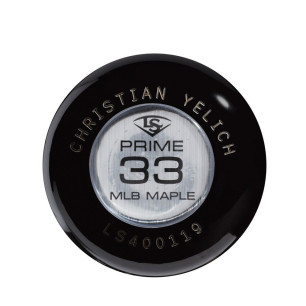
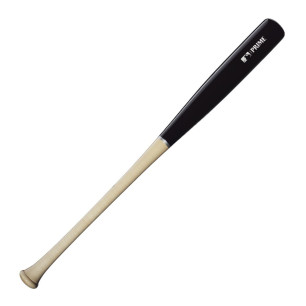
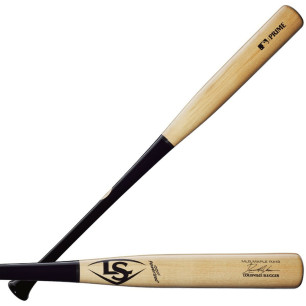
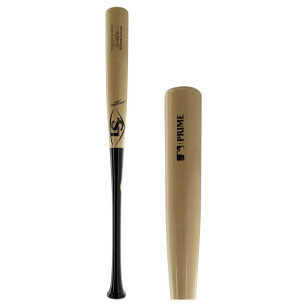
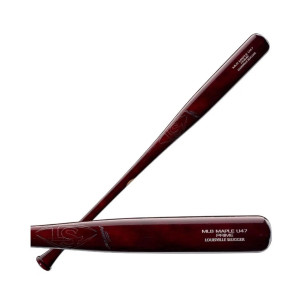
Louisville Slugger MLB Prime Maple The absolute benchmark. The MLB Prime maple bat is manufactured from billets selected from the top 1 percent of production — fibres are individually checked for maximum straightness and grain density. Available in every major profile (C271, C243, I13, R161) with full customisation options (colours, engraving, finish). The bat of champions since 1884.
Marucci AP5 Maple The choice of more than 25 percent of MLB players. The AP5 maple is built to the same standards as the bats delivered to professional players at the start of every season. Its proprietary ProModel billet selection uses only grade-1 wood with tight, consistent fibres. Available in natural or tan finish depending on the model.
Rawlings Pro Maple Rawlings is one of the few brands still hand-turning its wood bats in a dedicated American facility. The Pro Maple is available in several profiles (Pro110, Pro134, Pro150) with hand-lacquered finishes and hand-stitched leather grips on premium models. Pro models are subject to the same quality controls as match-day bats used in professional play.
Victus Grit Maple The standout choice for younger competitive players and serious amateurs. The VGS (Victus Grip System) surface treatment applied to the barrel hardens the hitting surface from the very first use — delivering the feel of a broken-in bat from day one. Available in fully customisable profiles with a shorter turnaround time than most premium brands.
Caring for your maple bat
No specific hitting technique required. Unlike ash (which must be hit "label up"), maple has no preferential hitting orientation — its diffuse pore structure gives it equal strength in all directions.
Inspect the handle regularly. Maple can break without warning, unlike ash which shows progressive wear before breaking. After each session, run your hand along the handle to check for micro-cracks or any unusual feel.
Avoid excessive humidity. Maple absorbs moisture and can gain weight over successive seasons if stored in a damp environment. Store your bat in a dry location at ambient temperature.
Do not hit in cold weather. Below 10°C (50°F), maple becomes more brittle and the risk of breakage increases significantly. Allow your bat to warm to ambient temperature before use in cool conditions.
Lifespan. A professional-grade maple bat that is well maintained can last 1 to 3 seasons in intensive use, and considerably longer with moderate or training-only use.
Why buy your maple bat from Sportland American?
Since 2011, Sportland American has been Europe's specialist destination for American sports equipment. We import professional-quality maple bats directly from the United States — Louisville Slugger, Marucci, Rawlings, Victus — selected from grade-1 billets with straight, tight grain. We do not sell second-quality bats. Our team advises players on the right barrel profile, cupping option, and length for their hitting style and level. Fast delivery across France (24–48h) and worldwide shipping to over 50 countries.
→ Other wood species: Ash bats — Birch bats → All wood bats → Composite bats — Fungo bats → Complete baseball bat guide — all materials → Complete your kit: baseball gloves — baseball cleats